KEYNOTE SPEAKERS / CONFÉRENCIERS PRINCIPAUX
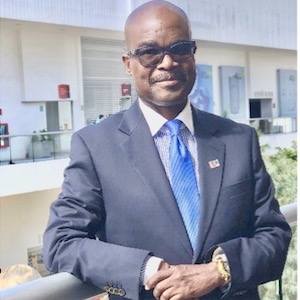 Paul Tiyambe Zeleza is a globally recognized scholar, academic leader, and public intellectual whose life and career span seven countries—Zimbabwe, Malawi, Britain, Canada, Jamaica, Kenya, and the United States. He has served at 14 universities, holding positions from department chair to university president, and has been an active leader in academic organizations, including as President of the U.S. African Studies Association and a member of the Administrative Board of the International Association of Universities. He has also collaborated with major philanthropic foundations and intergovernmental agencies on higher education and development initiatives. An interdisciplinary scholar, Zeleza’s work encompasses African economic and intellectual history, diaspora and gender studies, cultural studies, literary criticism, and human rights. He is the author or editor of 31 books, several internationally award-winning, and over 400 articles, chapters, and essays. His novel Smoldering Charcoal (1992), now being adapted into a feature film, and one of his scholarly books were named among Africa’s 100 Best Books of the 20th Century. Zeleza has raised tens of millions of dollars for institutional development and delivered over 300 keynote addresses and lectures in 33 countries. He has been honored as one of 43 Great Immigrants by The New York Times and holds honorary degrees and fellowships from Dalhousie University, the University of Cape Town, Nelson Mandela University, and Harvard University.
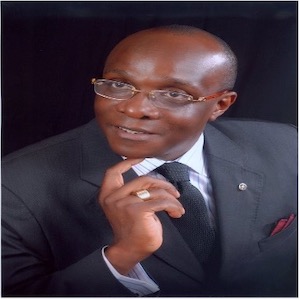 Barrack O. Muluka is a scholar in Politics and International Relations, with a bias for migration studies. He holds a PhD from the School of History, Politics and International Relations of the University of Leicester, UK. He also holds graduate and undergraduate qualifications from the University of Nairobi (Master of Arts in Armed Conflict and Peace Studies, Postgraduate Diploma in Mass Communications and Bachelor of Arts (Hons) in Linguistics). He has worked in publishing, as well as in public communications. He has written and published widely as a commentator on politics. He has published over three thousand (3,000) newspaper articles on politics and literature and given over two hundred interviews on local and international radio and television. He presently works with the Government of Kenya as a senior communications advisor.
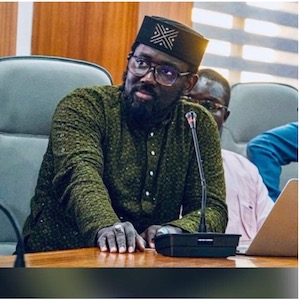 Cheikh E. Abdoulaye Niang a obtenu son doctorat en Sociologie et en Anthropologie à l’Université de Toulouse II Jean Jaurès en FRANCE. Il est actuellement chercheur au Laboratoire d’Anthropologie culturelle de l’Institut fondamental d’Afrique noire. Il y mène des recherches sur les dynamiques du religieux, les mobilités ouest-africaines, les mobilisations collectives au Sénégal et la diffusions des savoirs en Afrique. Impliqué dans plusieurs consortiums et projets de recherche pluridisciplinaires, Dr Niang est le Président de la Commission des Publications de l’Institut fondamental d’Afrique noire et également le rédacteur adjoint du Bulletin de l’IFAN Série B, Sciences humaines. Il est par ailleurs membre du Comité scientifique du Centre de Recherche et de Documentation sur les Intellectuels et Savoirs (CERDIS).
SPEAKERS / INTERVENANTS
 Ibrahim Oanda is a scholar–practitioner whose work bridges higher education, international development, and the strengthening of African knowledge systems. With more than two decades of experience shaping programmes across the continent, he has contributed extensively to research training, doctoral mentorship, and the professional growth of early‑career academics. His work also spans continental policy frameworks, focusing on research capacity, institutional development and governance, and the creation of collaborative, multi‑stakeholder partnerships that advance Africa’s higher education ecosystem.
 Jacob Jaygbay is a software engineer and currently serves as a Senior Content Developer at Microsoft. He is also a former Editor at the Council for the Development of Social Research in Africa (CODESRIA) in Dakar, Senegal. He studied Software Engineering at George Mason University and holds an MPhil in Digital Publishing from the University of Stirling in Scotland, United Kingdom. He has published multiple articles on scholarly knowledge production and self-censorship in Africa
RESOURCE PERSONS / PERSONNES RESSOURCES
 Patience Abaufei Usongo is currently an Associate Professor of biogeography at the Department of Geography. University of Buea, Cameroon. She is a lecturer and researcher with over 20years of experience. She is also a consultant in the area of natural resources and environmental management. Dr Usongo has many peered review publications focusing on the management and conservation of natural resources using an integrated approach of policies, perception and practices. She is an Associate Editor of the Grassroot Journal of Natural Resources, Canada. She is also a reviewer with the Canadian Centre of Science and Education Journal of Energy and Environment, journal of water and climate change among others. She has also written and won many research grants including: CODESRIA (2015): Comparative Research Network Programme (CRN) on “Comparative assessment of forest conservation policies effectiveness from carbon dioxide (CO2) emission trends for the past three decades due to deforestation in and around Protected Areas in the Anglophone South Western and Francophone Littoral Regions of Cameroon”.; African Forest Forum (2015): Research grant on land use, land use change and forestry linked to climate change on “Community Perception of Forest Conservation Policies and Impact on Land cover change and CO2 emissions around the Korup and Kupe Reserves, Cameroon”; START (2014): Research grant on Reducing Tropical Deforestation and the Protection of Ecosystem Services to Support Food Security in Southwest Cameroon among others. Dr Usongo has also participated in many national and international conferences such as the International Mountain Conference 2022 in Innsbruck Austria and a participant at a workshop to support PANGEA, a NASA funded study to scope the possibility of NASA’s next Terrestrial Ecology Campaign in the tropics in 2024 in Washington D.C, USA among others She is a holder of a B.Sc degree in Geography, M.Sc degree in Environmental Control and Management; PhD in Geography with specialty in Environmental Impact Assessment, all from Obafemi Awolowo University (OAU) Ile-Ife, Nigeria. Dr Usongo also has a certificate in remote sensing and Geo data management/GIS from the Royal Museum for Central Africa, Teuvuren, Belgium.
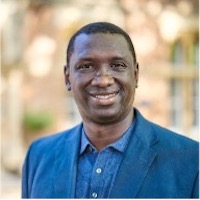 Ibrahim Bangura is with the Department of Peace and Conflict Studies, Fourah Bay College, University of Sierra Leone. He is also a senior partner of Transition International Netherlands, which is one of the leading consultancy firms in the world, specialised in supporting countries in transition from war to peace. Ibrahim has conducted studies in several countries in Africa. Alongside this, he has for over 14 years served as a Result Oriented Monitoring Expert, and has assessed European Union funded projects and programmes in over 30 countries in Africa. His recent publications include: He holds a bachelor’s degree in political science and history; a Master’s degree in Gender Studies from the University of Sierra Leone; a Master’s degree in International Development Studies from the University of Amsterdam; and a Doctorate in Economics, from the Leipzig Graduate School of Management in Germany.
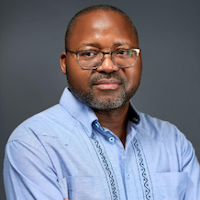 Elísio Macamo é professor de sociologia e estudos africanos na Universidade de Basileia, na Suiça. Formou-se em tradução e interpretação em Moçambique e na Inglaterra, e em sociologia na Inglaterra e na Alemanha. Neste último país obteve o doutoramento e a agregação em sociologia geral e sociologia do desenvolvimento. Já foi membro do conselho científico do Codesria
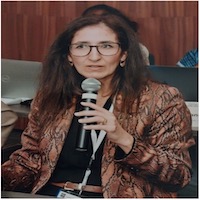 Hind Hourmat Allah est Professeure de l’enseignement supérieur à l’Université Cadi Ayyad de Marrakech. Elle est titulaire d’un doctorat et d’une HDR en économie-gestion. Elle est membre du laboratoire LIRE-MD (Laboratoire interdisciplinaire de recherches et d’études en management des organisations et droit de l’entreprise). Ses recherches portent sur les stratégies de développement international, l’économie des ressources halieutiques, les questions de genre, la gouvernance climatique et l’entrepreneuriat familial. Une part importante de ses recherches concerne les économies africaines. Depuis 2024, elle a rejoint le comité technique du projet GETSPA (Gender Equitable and Transformative Social Policy for Africa), au sein duquel elle assure une fonction consultative et de surveillance, garante de la rigueur des travaux menés. Auteure ou co-auteure de nombreux textes publiés dans des revues nationales et internationales, elle a également contribué à la réalisation de plusieurs projets de recherche à l’échelle nationale et internationale, notamment avec le CODESRIA.
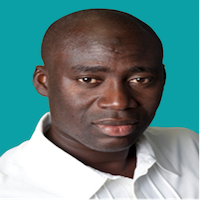 Chikouna Cissé est maître de conférences en Histoire de l’Afrique à l’université Félix Houphouet Boigny d’Abidjan (Côte d’Ivoire). Ses enseignements portent sur les migrations africaines de longue durée en Licence 3 ( Il est titulaire d’un doctorat d’Histoire Sur Migrations et mise en valeur de la Basse Côte d’Ivoire (1920-1960) et sur l’épistémologie de l’histoire (Master I et II). Son domaine de recherche s’étend depuis quelques années, à l’étude de la diaspora marchande jula en Afrique de l’Ouest. Dans ce cadre, Chikouna Cissé est membre de l’équipe internationale chargée de la rédaction du volume IX de l’Histoire générale de l’Afrique, portant sur l’africanité globale. Il est également membre du réseau indo-européen et africain pour l’étude des diasporas marchandes à l’ère moderne. CISSE Chikouna est ancien fellow de l’institut d’études avancées(IEA) de Nantes d’octobre 2012 à juin 2013. Il est depuis 2021, sollicité par le HCR en qualité d’expert formateur dans le cadre du programme du HCR sur le cours francophone d’apatridie et de nationalité. Il s’occupe du volet Migrations historiques et formation des identités en Afrique du XVe au XXe siècle. Il est également responsable de l’Axe Mouvement de populations et formation des identités au sein de l’école doctorale SCALL de l’UFHB. Pr. CISSE Chikouna est depuis le mois de juin dernier, membre du conseil scientifique du CODESRIA.
MRI Publication and Dissemination Workshop – Highlights
Day One
Day Two
Day Three
LAUREATES / LAURÉATS
RETHINKING RESILIENCE IN GENDER AND SEXUAL-BASED VIOLENCE IN SOUTH AFRICA AND ZAMBIA
Choolwe Muzyamba
Project Summary
The project “Rethinking Resilience in Gender and Sexual-Based Violence in South Africa and Zambia” aims to explore and document the effectiveness of community mobilization as a tool to combat sexual and gender-based violence (SGBV). Southern Africa continues to face high rates of SGBV. Traditional mitigation strategies, such as legal reforms and gender mainstreaming, have not sufficiently addressed the underlying social and cultural factors that perpetuate violence. This research adopts a transformative and empowering methodology, utilizing Photovoice to capture the lived experiences of affected communities in Zambia and South Africa. Participants will document their experiences through photography, which will then be used in group discussions to identify themes, challenges, and solutions. This approach aims to empower marginalized voices and facilitate social change by raising awareness of the complexities surrounding SGBV. The project seeks to reimagine community mobilization by considering the symbolic, material, and relational dimensions of social environments. It aims to provide a comprehensive framework for effective SGBV interventions that are context-specific and culturally relevant. The findings will contribute to policy formulation and offer practical solutions to enhance resilience against SGBV in the region.
About the author:
Dr. Choolwe Muzyamba is an esteemed academic and researcher specializing in global health, governance, and community mobilization. He is an Assistant Professor at Utrecht University and a Lecturer at the University of Amsterdam in the PPLE college. Additionally, he serves as a Researcher at the Centre for Competition, Regulation and Economic Development (CCRED) at the University of Johannesburg. Dr. Muzyamba holds a PhD in Global Health and Governance from Maastricht University and an MSc from the London School of Economics. His research focuses on addressing sexual and gender-based violence (SGBV) in Southern Africa, with numerous publications in top journals. He has provided consultancy for organizations like the World Bank and UNICEF, contributing to regional policy development. Dr. Muzyamba is dedicated to fostering diversity and inclusion in academia, mentoring the next generation of global health scholars.
INTERNATIONAL COOPERATION AGENDAS AND THEIR IMPACTS ON NATIONAL POLICIES: TRENDS, CHANGES, AND IMPLICATIONS – AN ANALYSIS FOR CABO VERDE
Djalita Fialho, Iolanda Évora & Jandira Barros
Project Summary
This research analyzes the impact of international cooperation agendas on Cabo Verde’s public policies, highlighting socioeconomic and cultural aspects. Using an approach that combines public policy analysis with a critical reflection on hegemonic development approaches in Africa, it explores the interactions between global policies and the specific dynamics of Cabo Verde. The study investigates the effects of these international agendas on social dynamics and national political decision-making processes. The central research questions relate to how these agendas are adopted in Cabo Verde and their relevance to local needs, crises, and endogenous perspectives on social well-being. The methodology involves analyzing cooperation documents, government policies, NGO plans, and interviews with civil society members. This comprehensive approach aims to uncover the challenges Cabo Verde faces in international cooperation and emphasizes the importance of local voices in shaping development trajectories. The practical importance of the research lies in informing policymakers and international agencies about the need for inclusive and contextually relevant development approaches.
About the authors:
Djalita Fialho is a researcher and international development consultant with a Ph.D. in Development Studies from the International Institute of Social Studies, in The Hague. She also holds degrees from Instituto Superior de Economia e Gestão, Harvard University and the University of Massachusetts. Her work focuses on the interplay between global and national policies, particularly in Cabo Verde, advocating for inclusive and contextually relevant development. She has held advisory roles with the Community of Portuguese- Speaking Countries and the UN and has consulted on projects aiding countries transitioning from the Least Developed Country (LDC) category. As an Executive Board Member at the Pedro Pires Institute for Leadership, in Cabo Verde, she contributes to leadership training and development planning. Her work emphasizes sustainable and culturally sensitive development, positioning her as a thought leader in international development.
Iolanda Évora is a senior researcher from CEsA and professor from ULisboa. She holds a bachelor´s degree in Psychology and master and Ph.D´s degree in Social Psychology from Instituto de Psicologia, Universidade de São Paulo, Brazil. Her works focuses on cooperativism in Cabo Verde, Gender and CapeVerdean diaspora, contemporary African mobilities, Afrodescendance, and Qualitative Methodology. She is currently co-coordinating the EU Democracy in Action consortium project in Portugal, and coordinates the EU TransAtlantic Crossroads Lab consortium project at CEsA. She coordinated the project Afro-Port on Afro-descendants in Portugal and is a team member of the project “International Cooperation Agendas and their Impacts on National Policies: Trends, Changes, and Implications An Analysis for Cape Verde” (CODESRIA, 2025–26). She published in the book Black Studies in Europe. An Anthology of Soll and Seeds (2025), co-edited The Open Veins of the Postcolonial: Afrodescendants and Racisms; Diálogos de campo. Pesquisas participativas em debate; Género e Migrações Cabo-verdianas; Trabalho, sociabilidade e geração de rendimento no espaço lusófono; Ciências Sociais em Cabo Verde.
Jandira Barros holds a bachelor’s degree, and two master’s degrees focused on Social Work and Program and Public Policy Evaluation. She recently completed a Public Policy Analysis certification at the London School of Economics and Political Science (LSE). With a two-decade career, she served as a Special Advisor to the President of Cabo Verde. She has been dedicated to consultancy since 2018, participating in various studies and evaluations and showcasing expertise in social protection, gender, and human rights. The unequal reproduction of international development and its manifestation in the expressions of social inequality in Cabo Verde is a topic of particular interest to her and is reflected in some of her articles. She is a founding partner of Social3, a company dedicated to advocating for social rights and enhancing intervention practices in the social sector.
CLIMATE CHANGE INDUCED FLOODING AND FOOD SECURITY OF FEMALE SMALLHOLDER FARMERS IN NIGERIA
Judith I Ani, Loveth C. Ode-Omenka, Oluwayemisi Kadijat Adeleke & Ngwengeh Brendaline Beloke
Project Summary
In economically disadvantaged countries, particularly in Nigeria, climate change intensifies challenges for women, exacerbating existing gender inequalities. It affects food production, access, income, health, and assets, particularly as Nigeria faces rising hunger and severe food insecurity. Women, who make up a significant portion of the impoverished population and the agricultural labour force, often lack adequate consideration in studies addressing food production from a gender perspective. Research gaps persist, especially regarding the impact on female smallholder farmers, comprehensive understanding of climate change induced flooding and food security of female smallholder farmers in Nigeria. Built on the Eco-feminism theory and employing a mixed-method approach, the study focuses on the nuanced impacts of flooding on the food security and income of female smallholder farmers and explores their coping mechanisms to provide a robust understanding of climate change’s effects on women in Nigeria. The study aims to inform targeted policy-making and interventions to enhance the resilience of women in agriculture and mitigate adverse impacts on their livelihoods. The findings are expected to guide the development of adaptive measures, benefiting governmental bodies, communities, and the Ministry of Agriculture by offering insights for holistic policies addressing food security, environmental conservation, and socio-economic initiatives.
About the authors:
Judith Ifunanya Ani, PhD is a postdoctoral fellow at Walter Sisulu University, South Africa. She serves as the Chief Operations Officer/Director of Research at Inspire World International Foundation, Abuja, Nigeria and leads Partnerships and Programs at DePECOS Institutions and Development Research Centre, Ota, Nigeria. With research interest in health, gerontology, gender, migration, food security and climate change, she has received awards for her impactful research, contributing to several funded projects, the most recent being the prestigious 2023 African-German Network of Excellence in Science (AGNES) Grant, funded by BMZ (German Ministry for Economic Cooperation and Development) and AvH (Alexander von Humboldt Foundation). Passionate about evidence-based research, she aims to address Africa’s social and health challenges for sustainable development.
Loveth C. Ode-Omenka is a graduate student at Covenant University, Ota, where she is currently pursuing a Ph.D. in the Department of Economics and Developmental Studies. She holds a B.Sc.(ed) in Economics from the University of Port Harcourt and an M.Sc. in Economics from Bells University of Technology in Ota. Her research interests encompass Development Economics in areas of Agriculture, Food Security, Climate Change, Finance, and Gender-related topics. Alongside her doctoral studies, she serves as an Assistant Lecturer in the Department of Economics, Accounting, and Finance at Bells University of Technology, Ota. Loveth is a member of the Association of Nigeria Economics Society (FMNES) and research associate at DePECOS Institutions and Development Research Centre. She has contributed to several publications, including articles and conference papers.
Oluwayemisi Kadijat Adeleke is a Senior lecturer at the Redeemer’s University, Nigeria, where she teaches both undergraduate and postgraduate students. Her area of specialization is in the fields of Macroeconomics, Development Economics, Environmental Economics and Financial Economics. In recent times, her particular interest has focused on sustainable development goals, governance and the green economy, migration and remittances and their gender effects. She received a fully sponsored PhD scholarship from the African Economic Research Consortium (AERC) and her PhD program was a collaborative effort between the University of Ibadan and University of Benin Nigeria. She also obtained her Master’s degree in Economics from the University of Ibadan, Nigeria and her BSc degree in Economics from Covenant University, Nigeria. She is an Associate member of the Association of certified chartered Accountant (ACCA) and lectures in the Accounting Technician Scheme in Redeemer’s University. She was part of the team that won the CODESRIA 2023/2024 Meaning-making Research Initiative (MRI) grant. Lastly, in her career, she has a goal to continue writing and producing high quality research and publishing the findings in top journals with the ultimate goal of advancing knowledge in the field of Economics.
Ngwengeh Brendaline Beloke is a PhD holder in Management Sciences from the University of Buea, Cameroon. She is currently a part time lecturer in the Department of Banking and Finance in the same university and HIBMAT University Institute of Buea (HUIB) where she serves as the Head of Department for Banking and Finance and coordinator for the B.Sc programmes. She has contributed articles in scholarly journals of high repute. In 2023, she presented at the Merian Institute for Advanced Studies in Africa (MIASA) Policy conference and Council for the Development of Social Science Research in Africa (CODESRIA). Currently she is the lead author of a Book Chapter published by Routledge and Taylor and Francis Group. Dr. Beloke is also a Reviewer for Heliyon journal.
USING HUMAN-CENTERED DESIGNS TO DEVELOP DIDACTIC LEARNING APPROACHES FOR REMOTE LEARNING IN INSTITUTIONS OF HIGHER LEARNING IN AFRICA
Felishana Jepkosgei Cherop, Naomi Koske, Diane Korir-Uyoga, Violet Naanyu & Gloria Agyapong
Project Summary
To achieve the 2030 Sustainable Development Goals for quality education in Africa, higher learning institutions must adopt innovative teaching approaches to enhance student practical skills through remote learning. However, there are insufficient didactic learning approaches to enhance students’ practical experiences in a remote learning environment. We will use Human-Centered Design (HCD) to co-develop didactic learning methods for remote learning within higher learning institutions in Africa. We will use the PRECEDE-PROCEED model employing concurrent and sequential mixed methods to conduct a collaborative 2-step study at Moi University, Kenya, and the University of Cape Coast, Ghana. First, a feasibility assessment involving surveys of (n=237) undergraduate students, (n=327) faculty members, and 24 Key Informant interviews with key decision makers in higher education will determine the need for integrating didactic learning approaches in remote learning and end-user needs, 6 HCD workshops of 8 members to co-design the intervention. We will use the REDCAP platform to collect survey data and semistructured interview guides for KIIs and responses from HCDs. Univariate, bivariate, and thematic analyses will be conducted. Ethical permits will be obtained before conducting the study. We will document a detailed report about the remote learning landscape and a prototype of a didactic learning model.
About the authors:
Felishana Jepkosgei Cherop is a lecturer at Moi University with a background in Strategic Management, International Health Research Ethics (Bioethics), and Human Resource Management and over 10 years of experience in teaching and research. She is proudly a CARTA Graduate and a DAAD alumni. She has a passion for interdisciplinary research and her previous research interaction with industry, healthcare system and communities using mixed methods designs has enhanced her research experience. She is committed to student-centered learning, utilizing blended learning methodologies to engage undergraduate and postgraduate students. She was the coordinator in charge of E-learning in her school and the use of remote learning platforms is her critical interest. She participated in Digital Skills Training for Universities’ Transformation Towards Quality Education Experience and hopes to contribute to the co-design of didactic learning approaches for remote learning to enhance students with experiential learning. She is a reviewer at her local Institutional Review Board (IRB) and has published 7 articles in peer-reviewed journals.
Naomi Chepkorir Koske is a Finance and Accounting lecturer at Moi University with over 10 years of experience in university teaching, research, proposal and grant writing, business coaching, and curriculum development. She serves as the Chair of the Department of Accounting and Finance at Moi University. She has mentored several students, graduating 6 PhDs and 14 Masters, has coauthored 22 research papers, presented papers in both local and international conferences, and has won prestigious grants (DAAD, AFDB, NORPART). She also attended a 3-weeks workshop series for Didactics in Higher Education in Germany sponsored by DAAD. Her expertise includes data analysis using STATA, SPSS, and E-Views. Dr. Koske holds a Ph.D. in Business Management (Finance), an MBA in Financial Management, and a Bachelor of Business Management (Accounting). She is a Certified Public Accountant of Kenya (CPA-K) and a member of ICPAK.
Diane Uyoga is a lecturer at Moi University, Department of Marketing and Logistics. She has previously served as the head of the Department of Aviation Management and Operations. She has extensive training and teaching experience in both quantitative and qualitative research designs and has published on quantitative research approaches in Kenya. She has served in the university in the capacity of knowledge integration and transfer in the fields of research, marketing, management and aviation. She has actively participated in curriculum development for undergraduate and master’s levels of education in Kenya. She has been a team member for committees that write and appraise proposals for grants for the university. Currently, she represents the department in issues that affect Gender, Equity and Research Development at Moi University. Diane, born in Kenya has contributed to the community through mentorship of girls in the local community. She also participates in the preservation of the culture of local communities within the North Rift Region.
Violet Naanyu is an Associate Professor at Moi University and a researcher at AMPATH Kenya (ampathkenya.org/research) and the Center of Excellence in Women and Child Health, Aga Khan University, Kenya. She trained in Sociology (USA), Medical Anthropology (Holland), and Global Bioethics (Mexico) and is an elected Fellow at the African Academy of Sciences (www.aasciences.africa), member of the WHO Technical Advisory Group on Behavioural Sciences for Better Health, and Board Member and Patient Representative, Drugs for Neglected Diseases initiative (dndi.org/). She has over 130 peer-reviewed publications (0000-0003-0182-1719), and her 30 years of health research cover nine nations. She has extensively used community-engaged research and human-centred designs.
Gloria Agyapong is an Associate Professor of Marketing and Head, Department of Marketing and Supply Chain Management at the University of Cape Coast, Ghana with over 12 years of teaching experience. She holds a PhD in Business Administration and a Professional Postgraduate Diploma in Marketing from the Chartered Institute of Marketing, UK. Her research interests include total quality management, public sector marketing communications, social media advertising and circular economy principles. She has participated in two didactical training workshops in Ghana and Germany sponsored by DAAD. She is also a visiting Professor at the Bonn-Rhein-Sieg University of Applied Sciences in Germany. Notably, she is a co-founder and Executive Director of the Consortium of Virtual Exchange and has contributed to virtual exchange projects since 2016.
URBANIZATION TRAJECTORIES IN AFRICAN PORT CITIES: HISTORY, MEGA-INFRASTRUCTURES AND LIVELIHOODS
Afra Foli, Mariam Genes, Razaz Basheir, Zhengli Huang & Wangui Kimari
Project Summary
In the rapidly urbanizing African context, this study seeks to examine the interaction between mega infrastructures and local livelihoods in four African port cities. Specifically, the research will focus on the seaport in Port Sudan in Sudan, Mombasa in Kenya, Dar es Salaam in Tanzania, and Tema in Ghana. The investigation will view these projects as arenas for political-economic activities as well as spaces of expression of citizenship and political subjectivities. Over the decades since the initiation of these developments, the study aims to address questions regarding the extent to which these projects have lived up to their promoted images. Drawing on literature on development of port cities in their broader socio-economic dynamics, as well as their role in urbanization processes as impacted by being links in logistics value chains and international trade. Additionally, the research will scrutinize the dynamics of social and ecological costs externalization, examining the interplay among local, national, and international actors. Moreover, it will explore how these mega-infrastructures were influenced by discourses of modernization during both colonial and postcolonial eras, and the power dynamics they are mediating. Lastly, the study will investigate the potential for governance of the commons that empowers local communities to have more control over their natural resources while charting their path to a modernity that is attentive to sustainable local ecosystems and livelihoods.
About the authors:
Wangui Kimari is a lecturer at the American University Abroad Program – Nairobi. She is also a participatory action research coordinator at Mathare Social Justice Centre (MSJC), and an honorary research associate at the African Centre for Cities (ACC) at the University of Cape Town. Her work draws on many local histories and interdisciplinary theoretical approaches within and beyond anthropology – including oral narratives, assemblage theory, urban political ecology and the black radical tradition – in order to think through urban spatial management in Nairobi from the vantage point of its most marginalized residents. Her publications have appeared in diverse journals including Antipode, Urban Studies, Urban Geography, Africa and the Journal of Eastern African Studies. Wangui is also an editorial board member of the online publication Africa Is a Country (AIAC), and a co-organiser of the UTA-Do African Cities Workshop, an annual critical urban studies summer school in Nairobi that encourages young scholars, predominantly from the region, to theorise and valorise the various praxes that emerge through and with dynamic African spaces.
Afra Foli is a PhD candidate in Urban Geography at the Amsterdam Institute for Social Science Research. She studied Human Geography and Planning (BSc) at the University of Utrecht and the University of Toronto, and Urban Studies (MSc) at the University of Amsterdam and University of Pretoria. Following her master’s degree, she worked for a social impact studio in Amsterdam and Accra. Her PhD research examined the social and political relations embedded in the infrastructure, flows and practices of drainage in Accra. It focused on the everyday geographies of waste and drainage infrastructure, approaching urbanization as a subjective, socio-ecological process and combining urban ethnography with geospatial analysis.
Mariam Genes is an economist and is currently employed as an Assistant Research Fellow at the Institute of Human Settlements Studies (IHSS), Ardhi University. She has a Master Degree in Public Policy Analysis and Programme Management and is in the second year of her PhD (Urban and Regional Planning) at the University of the Witwatersrand, Johannesburg. Her research areas of interest include urban economics, local economic development, and public policy analysis. For the last seven years to date, she has been involved in multidisciplinary research projects in Dar es Salaam. These include research on urban (in)equality and livelihoods, inclusive urbanization, resilient cities, and rural-urban transformations.
Razaz Basheir is a PhD candidate at the African Centre for Cities-University of Cape Town, where she is combining engineering and urbanism in her interdisciplinary research on the CLAIMS to Energy Citizenship in Cape Town project. Her focus is on studying infrastructure configurations in Sub-Saharan African cities, exploring technopolitics, governance, and the political economy surrounding these configurations. Razaz has master degrees in Southern Urbanism (MPhil) from the University of Cape Town and Energy Strategies (MSc.) from Ecole des Mines ParisTech. Her recent publications include: Basheir, R. (2024). ‘Citizenship Rights in Sudan: Discourse and Practice in Revolution and War’, Rowaq Arabi, 28 (3), pp. 59-79, DOI: 10.53833/HQXJ7410. Salah, M., & Basheir, R. (2023). (Un)Just transition in power generation: neoliberal reforms and climate crisis in Sudan. Review of African Political Economy, 50 (177– 178), 402–420. https://doi.org/10.1080/03056244.2023.2281085
Zhengli Huang is a Research Associate at the School of Geographical Sciences, University of Bristol. She’s also an Urban Studies Foundation International Fellow at the Department of Urban Studies and Planning, University of Sheffield. Dr Huang obtained her PhD in architecture and worked extensively on slum upgrading projects in Kenya during her internship at UN-Habitat between 2011 and 2012. In 2014, she served as a Project Manager for a school-building initiative in Mathare Valley, one of Nairobi’s largest informal settlements. Upon completion of her PhD, she participated in other projects in Africa and subsequently delved into research on African cities, focusing on the impact of the state capital from China on the infrastructure development on the continent. Her recent publications include:
-
- Huang, Zhengli, and Gediminas Lesutis. 2023. ‘Improvised Hybridity in the “Fixing” of Chinese Infrastructure Capital: The Case of Kenya’s Standard Gauge Railway’. Antipode 55(5):1587–1607
- Huang, Zhengli, and Andrea Pollio. 2023. ‘Between Highways and Fintech Platforms: Global China’s and Africa’s Infrastructure State’. Geoforum
- Huang, Zhengli, and Tom Goodfellow. Centralizing Infrastructure in a Fragmenting Polity: China and Ethiopia’s ‘Infrastructure State.’ In The Rise of the Infrastructure State Pp. 122–136. Bristol University Press
ECOLOGICAL PARADIGMS IN HOUSING DEVELOPMENT AND ITS IMPACTS TO WOMEN LIVELIHOODS IN PERI-URBAN AREAS
Nyamagere Gladys Sospeter, Sarah Phoya, Nyangi Chacha, Geraldine John Kikwasi & Grace Khumalo
Project Summary
Ecology has great effects on society if its potential is not well tapped. Although a number of recent studies have focused on gender and climate changes in Africa, there is paucity of knowledge on the impacts of ecology to women livelihoods. This project is aimed to determine the integration between housing development, ecology and its impact to women livelihoods in peri-urban areas. Specifically, the project seeks to: Assess perceptions of women on inclusion of ecological aspects in housing development for socio-economic development. Devise interventions / develop prototype design that will aid to transform housing development towards supporting women livelihood in ecosystems. Build capacity for women researchers and disseminate findings to the community. The findings of this project are expected to join the ecology conversation by providing useful insights on the interaction between ecological aspects and its impact to women livelihoods in peri-urban areas. Projects key members (Consultants, Clients, Contractors) will benefit in terms of the knowledge to provide for orientation, water harvesting mechanisms, productive ecology plants as well as green space, which are important for harnessing ecology for developers and society at large in African context. The main objective of the project is to determine the integration of ecological aspects in Housing development and its impact to women livelihoods in Peri-urban settings.
About the authors:
Nyamagere Gladys Sospeter (PhD), is an Associate Professor in Building Economics department at Ardhi University and visiting Researcher at the Graduate School of Business Leadership, University of South Africa (UNISA), South Africa. Prof. Sospeter is associate member of Tanzania Institute of Quantity Surveyors (TIQS) and Chairperson of TIQS-Women Chapter. She is registered as Graduate Quantity Surveyor by the Architects and Quantity Surveyors Registration Board (AQRB). Apart from academic qualification, she is currently appointed Executive Secretary of the Academy of African Business and Development (AABD) 2025-2028, appointed Chairperson, Board of Tanzania Women Contractors Association (TWCA). Appointed, Board Member, Association of African Quantity Surveyors (AAQS). She was appointed Board member of the School of Architecture, Construction Economics and management SACEM and School of Earth Sciences and Real Estate and Business Studies (SERBI) for 2016-2021. She has participated in many research projects covering area of specialization and provided business consultancy services to international and local organizations. Her research interests include: project management, strategic management, Entrepreneurship, stakeholder engagement & management, monitoring and evaluation, risk management, gender, financial management and Leadership.
Sarah Phoya is a Senior Lecturer in the School of Architecture, Construction Economics, and Management at Ardhi University in Tanzania. She has over 15 years of experience in both academic and professional fields, with eight years in administrative positions. Dr. Phoya has served as the head of links and international affairs at Ardhi University for seven years and is currently the manager of the publishing centre at the university. She earned a BSc degree in Building Economics from the University of Dar es Salaam in 2003, an MS degree in Construction Management from Cape Peninsula University of Technology in South Africa in 2005, and a PhD from Ardhi University in 2014. Dr. Phoya has conducted extensive research in the areas of Health and Safety Management in construction, Risk Management, Sustainable Construction, Disaster Risk Management, and Informal construction. Outside of work, Dr. Phoya enjoys watching movies and traveling.
Nyangi Chacha holds a PhD in Renewable Energy Biotechnology as well as an MSc in Integrated Environmental Management from the University of Dar es Salaam in Tanzania, and a BSc in Environmental Science and Management from Tanzania’s Sokoine University of Agriculture. She is currently a lecturer at Ardhi University’s Department of Environmental Science and Management. Since 2005, she has been undertaking research and consultancy in several fields of environmental science, including renewable energy; resource recovery; Water, Sanitation and Hygiene (WASH), and climate change. She is a registered EIA expert, member of OWSD, ARSO, TaNEA, and ISO, and former Head of Environmental Science and Management Department at Ardhi University.
Geraldine John Kikwasi is an Associate Professor in the School of Architecture, Construction Economics and Management at Ardhi University. She attained Adv. Dipl in BE in 1993 from Ardhi Institute (Tanzania), MSc. EM in 1999 from UDSM (Tanzania), and a Ph.D in MES from BJUT (China) in 2005. She has over 30 years of working in the construction sector and over 18 years of experience in teaching and research activities. Her research areas include women in construction, risk management, H&S in construction, conflicts, and disputes. She is registered with AQRB Tanzania and was a Board Member from 2011 to 2020. She is a Panel Member of the NCC Arbitrators, accredited by the Tanzania Centre of Arbitrators (TCA), and was a Board Member of from 2015 to 2019. She previously held the positions of Director and Dean at Ardhi University between 2007 and 2016. She is currently a fellow member and Council member of TIQS.
Grace Tamanda Gareta Khumalo currently works at Malawi University of Business and Applied Sciences as Head of the Architecture Department and Lecturer. Her professional journey began in 1993 when she graduated from the University of Malawi with a Diploma in Architectural Studies. She returned to the University of Malawi in 2001 where she graduated with a Bachelor of Science in Architecture in 2004. She then moved to the University of Witwatersrand in South Africa where she obtained a Master of Science in Housing in 2013 and a Doctor of Philosophy in 2023. Her PhD thesis used the theoretical framework of place to examine how social space (self-built settlements developed on marginal, disasterprone urban land) is constructed. It is her passion to take this research further, with the aim of deconstructing the negative stereotypes associated with self-built settlements as they are shaped, lived and given meaning by the inhabitants.
FEMINICÍDIO ÍNTIMO SEGUIDO DE SUICÍDIO COMO UMA SITUAÇÃO LIMITE NA POLÍTICA DE GÉNERO EM CABO VERDE
Adilson Semedo
Resumo do projeto :
Partindo do pressuposto que possívelmente as explicações derivadas da construção histórica, cultural, social e religiosa da masculinidade cabo-verdiana podem serem usadas para normalizar discursivamente o fenómeno do feminicídio íntimo seguido do suicídio do agressor, elegemos a compreensão que fazem os familiares e os amigos das vítimas do feminicídio íntimo e do agressor suicida, através dos sentidos e das nuances de pensamentos criados para tornar inteligível este fenómeno, como um dos objectivos centrais da investigação. De forma complementar, pretendemos, igualmente, resgatar a leitura que académicos, agentes públicos e ativistas de géneros fazem sobre o feminicídio íntimo/suicídio, tomando-o como uma situação limite na política da regulação dos conflitos de géneros em Cabo Verde na contemporaniedade. Atendendo aos objetivos do estudo, seguimos uma orientação de matriz fenomenológica. Optamos pelo estudo de caso, essencialmente qualitativo, com caráter interpretativo, assumindo o investigador um papel de observador ativo durante todo o processo de estudo. Em termos de procedimentos técnicos a investigação aciona a pesquisa bibliográfica, a análise documental, o levantamento de dados no inquérito por entrevista, e o tratamento dos dados com base na análise dos discursos.
Sobre o autor:
Adilson Semedo é Professor Auxiliar na Universidade de Cabo Verde, afeto a Faculdade de Ciências Sociais, Humanas e Artes. A sua investigação científica explora os fatores culturais que influenciam as mudanças institucionais e comportamentais, com especial destaque para o poder como mediador destes processos. Nesse sentido, tem trabalhado com as temáticas da regulação política da religião em Cabo Verde; da gestão da participação comunitária em dinâmicas de modernização da sociedade em países em desenvolvimento e em transição; e da articulação da masculinidade contemporânea cabo-verdiana com as mudanças culturais locais e globais.
Até 2018 desenvolveu projetos, estudos e produziu publicações relacionadas com o estudo da relação entre o catolicismo e a cultura cabo-verdiana, com foco nas relações entre o poder secular e o poder espiritual no decurso da modernização política em Cabo Verde. A partir de 2019 passou a dedicar-se ao estudo da relação entre cultura, a sustentabilidade ambiental, e o desenvolvimento comunitário, com enfoque no trabalho piscatório e nas relações de géneros desenvolvidas com base na divisão social do trabalho e nas parcerias participativas de base territorial para a sustentabilidade. Decorrente disso, mais recentemente, tem se dedicado ao estudo e a reflexão sobre as alterações do papel e da identidade masculinas contemporâneas em Cabo Verde, como produtos de um conjunto de alterações culturais estruturais na sociedade cabo-verdiana. Adilson Semedo, é licenciado em Ciências Sociais pela Universidade Federal do Ceará/Brasil, detém um Mestrado em Estudos Africanos pela Universidade do Porto e um Doutoramento em Sociologia, com especialização em desigualdades, cultura e território, também pela Universidade do Porto.
INEGALITES ENVIRONNEMENTALES ET SANTE A CONAKRY
Ester Botta Sompare, Abdoulaye Wotem Sompare & Amadou Tidiane Barry
Résumé du projet :
Dans la ville de Conakry, la croissance démographique et l’absence d’infrastructures urbaines et surtout d’un système de gestion des eaux sales et des déchets, expose les populations à la dégradation de l’environnement et à l’insalubrité. Cependant, puisque les inégalités environnementales se recoupent avec les inégalités sociales, ce sont surtout les populations des quartiers les plus pauvres, situés au bord de la mer, qui subissent l’impact de ces changements. Dans ce projet de recherche, nous allons essayer d’établir une relation entre les inégalités environnementales, sociales, intergénérationnelles et de genre, pour montrer quelles sont les catégories socio-professionnelles et les groupes sociaux qui sont plus exposées à la dégradation de l’environnement. Avec une perspective attentive à l’agencéité des acteurs sociaux, nous allons aussi observer les stratégies et les savoirs que ces habitants de la capitale mettent en oeuvre pour lutter contre la détérioration de leur environnement et contre l’insalubrité qui s’ensuit. Nous mènerons cette enquête en utilisant des méthodes qualitatives empruntées à l’anthropologie, notamment l’observation participante et la description ethnographique, pour comprendre comment les habitants des quartiers paupérisés, qui sont souvent habités par les autochtones soussou et baga, participent à la dégradation de leur environnement et luttent, en même temps, pour sa préservation.
A propos des auteurs :
Ester Botta Sompare est anthropologue. Elle a soutenu en 2011 une thèse de doctorat concernant l’éducation dans une société peul semi-nomade de la Guinée Maritime. Elle enseigne depuis plus de quinze ans dans les universités guinéennes et elle a dirigé le Master en Sciences Sociales et Développement de l’Université Kofi Annan. Elle a participé à plusieurs projets de recherche internationaux. Ses recherches et publications portent surtout sur les thèmes de l’éducation et la transmission des savoirs et sur la mobilité et les migrations. Elle a publié chez L’Harmattan l’ouvrage Education familiale et scolaire dans une société pastorale guinéenne.
Abdoulaye Wotem Somparé est sociologue. Il a soutenu en 2006 une thèse de doctorat concernant les travailleurs des villes minières et ouvrières de Guinée. Depuis 2007, il enseigne dans les universités guinéennes et il a été, entre 2019 et 2021, vice-recteur et recteur par intérim de l’Université Julius Nyerere de Kankan. Il a participé à de nombreux projets de recherche internationaux et a travaillé comme socio-anthropologue consultant de l’OMS pendant l’épidémie d’Ebola en Guinée. Ses publications, entièrement fondées sur des recherches de terrain en Guinée, portent sur le travail, les migrations et la santé. Il a publié chez L’Harmattan l’ouvrage L’énigme d’Ebola en Guinée.
Amadou Tidiane Barry est doctorant en anthropologie sociale à l’Université Général Lansana Conté de Sonfonia Conakry et au Centre de recherche et de formation en infectiologie de Guinée. Son sujet de thèse est « Surveiller les épidémies et conserver la biodiversité : approches historiques et ethnographiques du rapport entre humains et non-humains dans le Parc national du moyen Bafing – Guinée ». Il a auparavant travaillé sur la santé communautaire, la COVID-19, la prévention et le contrôle des infections à l’hôpital.
ENJEUX MULTIDIMENSIONNELS DE LA PRODUCTION DE CHARBON DE BOIS AU BENIN
Corinne Bangami Darate, Myriam Tigri Dayori , Doriane Nicole Nomo Alinga & Nassibou Bassongui
Résumé du projet :
La production de charbon de bois est cruciale pour de nombreuses populations, fournissant des combustibles pour la cuisson et le chauffage à plus de 2,4 milliards de personnes à travers le monde. Les déterminants et conséquences sociaux, culturels, économiques et environnementaux sont rarement analysé dans une approche systémique. Ce projet explore les interactions complexes entre la production de charbon de bois et l’environnement, la santé des producteurs et la sécurité alimentaire au Bénin. Il examine les coûts économiques relatifs aux dommages environnementaux et sanitaires de la production de charbon, ainsi que les déterminants socioculturels de sa consommation urbaine Une approche mixte, combinant des méthodes quantitatives et qualitatives, sera utilisée. La recherche impliquera un groupe multidisciplinaire et une démarche participative avec les parties prenantes. Les résultats de cette étude fourniront des données probantes aux pouvoirs publics pour l’élaboration des programmes d’Information, Education et Communication (IEC) visant à élever la conscience des producteurs et consommateurs du charbon de bois. De plus, ces résultats informeront les décideurs sur la gestion durable des ressources forestières.
A propos des auteurs :
Corinne Bangami Darate Née le 25 février 1992 à Tanguiéta au nord Bénin, Corinne Bangami DARATE, a fait ses études primaires et secondaire à Tanguiéta. Après son bac série D en 2010, elle obtient avec succès son diplôme de Licence en Analyse et politique économique en 2014. Titulaire d’un Master en Economie de l’environnement et des ressources naturelles, Corinne Bangami DARATE soutient sa thèse de doctorat en Sciences Economiques, en juillet 2024. Tout le long de son cursus, elle a capitalisé d’excellentes compétences analytiques et développé une capacité à modéliser et à interpréter les résultats. De 2015 à 2017, elle a assisté la cellule de suivi évaluation des projets et programmes du Ministère de l’Économie et des finances. En 2020, elle fait ses preuves dans l’unité des politiques fiscales. Puis de 2020 à 2023, elle est assistante de recherche Juniore sur le projet CRDI Guev cooker.
Doriane Nomo Alinga est titulaire d’un doctorat (PhD) en sciences économiques de l’Université Félix Houphouët-Boigny (Côte d’Ivoire) sous le programme 100 femmes docteures du Programme de Troisième Cycle Interuniversitaire (PTCI) ; et d’un master de recherche en économie de l’environnement et des ressources naturelles à l’Université de Yaoundé 2. Ses travaux de recherche portent principalement sur l’institutionnalisation de la transition énergétique en Afrique. Elle est auteure de plusieurs publications scientifiques dans des revues internationales. Mme Nomoest actuellement professeur assistant à la faculté de science économique et gestion de l’université de Yaoundé 2.
Nassibou Bassongui est un ingénieur statisticien-économiste diplômé de l’École Nationale de la Statistique, de la Planification et de la Démographie (Bénin). Depuis 2020, il poursuit une thèse de doctorat en économie à l’Université d’Abomey-Calavi, portant sur l’économie de la pauvreté énergétique au Bénin. M. Bassongui possède une expertise dans les méthodes de recherche quantitative et qualitative. Fort d’une riche expérience de recherche, il a publié une douzaine d’articles scientifiques dans des revues internationales indexées dans SCOPUS et Web of Science. Ses centres d’intérêt en recherche incluent l’économie de l’énergie et de l’environnement, l’économie et la santé, l’économie comportementale, l’analyse de la pauvreté et des inégalités, ainsi que le ciblage et l’évaluation des politiques publiques.
Myriam Dayori Tigri est née le 28 avril 1971. Mme Dayori Tigri Myriam est originaire de la Commune de Tanguiéta dans le Nord du Bénin. Docteure en Sociologie du développement, elle fit ses études primaires et secondaires dans le Nord et le centre du pays. Quant aux études supérieures, elle les réalisa dans le Sud à l’Université d’Abomey-Calavi. Passionnée des questions de développement, elle a successivement servi en tant que Volontaire National des Nations-Unies au Programme d’Appui à la Stratégie de Réduction de la pauvreté (PASNAREP), Assistante Technique de la Promotion Féminine et chargée de la promotion du Développement Local au niveau communal dans les domaines du Genre et Développement, de l’Environnement et de la Lutte contre les IST et le SIDA. De novembre 2022 à nos jours, elle est enseignante chercheure vacataire à l’Université d’Abomey-Calavi et d’Adjarra.
ADAPTATION AU CHANGEMENT CLIMATIQUE ET LA PRODUCTION DU RIZ AU SENEGAL : UNE ANALYSE COMPARATIVE ENTRE LES SEXES
Frida Ngo Wengui, Bénédicte Atchade, Audrey Jennie Djijo Tiakou & Mongbo Kayode Majorie Jennifer
Résumé du projet :
Cette proposition de recherche examine l’impact des stratégies d’adaptation au changement climatique sur la production du riz. Elle utilise les données des exploitations du riz au Sénégal. Pour ce faire, nous utilisons la méthode d’appariement de score de propension pour évaluer l’impact des stratégies d’adaptation au changement climatique sur la production et la capacité productive des exploitations rizicoles au Sénégal. De plus, nous utilisons la méthode endogenous switching régression pour vérifier la robustesse des résultats en corrigeant le biais de sélection et d’endogénéité induit par les caractères observables et inobservables. L’intérêt de cette proposition de recherche est de fournir aux décideurs une base solide pour la formulation de politiques destinées à la reconception des programmes agricoles et des décisions d’adaptation au changement climatique.
Mots clés : changement climatique, Exploitations rizicoles, Productivité, Profitabilité, Revenu.
A propos des auteurs
Frida Ngo Wengui est économiste et chercheuse spécialisée en macroéconomie environnementale, développement durable et politiques publiques. Titulaire d’un doctorat en sciences économiques de l’Université de Douala, ses travaux portent sur les interactions entre changement climatique, agriculture et développement, avec un intérêt particulier pour les stratégies d’adaptation et les dynamiques de genre dans les systèmes agricoles en Afrique subsaharienne. À travers ses recherches et son engagement académique, elle contribue à une meilleure compréhension des défis liés à la résilience climatique, à la sécurité alimentaire et aux trajectoires de développement durable. Aujourd’hui au Canada, elle poursuit ses activités académiques et éducatives en s’investissant dans la formation des nouvelles générations et la promotion d’une recherche orientée vers l’impact, convaincue que la connaissance scientifique constitue un levier essentiel pour relever les défis contemporains du changement climatique, de la sécurité alimentaire et du développement durable à l’échelle mondiale.
Bénédicte Atchade est titulaire d’un Doctorat/PhD en économie de Développement obtenu dans le cadre du programme PTCI. Elle est spécialiste en Genre et Inclusion sociale. Son domaine de recherche est lié aux thématiques sur le genre et le bien-être des femmes et des enfants dans leurs aspects microéconomiques. Enseignante, consultante et chercheure à l’Université d’Abomey-Calavi (UAC), Benin. Elle a mené des études avec le Consortium pour la Recherche Economique en Afrique (CREA) en tant que chercheure principale et chercheure associée sur plusieurs autres projets. Elle est actuellement Research Fellow à United Nations Economic Commission for Africa, Sub-Regional West Africa (UNECA/SRO-WA).[Saut de retour à la ligne]
Djijo Tiakou Audrey Jennie est Etudiante doctorante en Economie de Développement à la Faculté des Sciences Economiques et de Gestion de l’Université Cheikh Anta Diop de Dakar. Ses intérêts de recherche sont : l’économie des télécommunications ; le genre et toutes questions liées à l’entrepreneuriat. Elle est affiliée au Laboratoire d’Analyse, de Recherche et d’Etudes en Economie de Développement (LARED) depuis 2020. Elle est l’auteur d’une publication scientifique portant sur le développement financier.
Majorie Jennifer Kayode Mongbo is an economist, researcher and consultant, specialist of climate change economics, and sustainable and inclusive development related questions in Economics. She holds a Ph.D. in Climate Change Economics from the West African Science Service Centre on Climate Change and Adapted Land Use (WASCAL) program. Her academic background includes a master’s degree in Applied Economics, focusing on natural resources and environmental economics, and a bachelor’s degree in Statistics and Econometrics.
She has gained substantial professional experience through various national and international research projects and consultancies, where she has collaborated, with institutions such as Climate Analytics, PASGR or UN-IDEP on policy researches, elaboration of strategic documents and development studies. Her work intersects empirical research, development economics, and climate policy. She is fluent in english and french and is passionate about using research to inform evidence-based public policies that promote social equity and climate resilience.
As part of a research project funded by CODESRIA, Jennifer contributes to research on the links between climate change adaptation and rice production in Senegal, with a particular focus on gender dynamics. The study explores how women and men farmers experience climate risks and adopt adaptation strategies, with the aim of generating evidence to inform more inclusive and genderresponsive agricultural and climate policies.
CONVERGENCES DE LUTTES : TRAVAIL, ENJEUX ECOLOGIQUES ET LUTTES SOCIALES DANS LES SECTEURS DE LA PECHE ET DU TRANSPORT AU CAMEROUN
Marie-Thérèse Mengue, Yvan Hyannick Obah, Calvin Minfegue & Christine Makia Masong
Résumé du projet:
À partir des secteurs du transport et de la pêche au Cameroun, ce projet s’intéresse aux modalités à travers lesquelles, des organisations collectives, syndicales ou associatives intègrent (ou pas) des préoccupations écologiques dans le travail d’organisation et de mobilisation des acteurs de ces secteurs. Cette logique d’intégration étant susceptible de refléter un effort, une volonté ou l’état de conciliation des revendications liées aux conditions de travail et celles relatives à la protection de la nature. La proposition tire parti des acquis de la critique (néo)marxiste et ceux relatifs à l’écologie politique, peu travaillée en Afrique. Elle permet ainsi de discuter de la connexion entre aspirations et luttes sectorielles traditionnelles et enjeux écologiques contemporains. Spécifiquement, il s’agira à partir des 2 secteurs ciblés (1) d’analyser les motivations historiques et politiques à l’origine d’une intégration ou d’un oubli de la préoccupation écologiste dans les mobilisations des travailleurs ; (2) de documenter (et d’analyser) les expressions techniques et politiques de l’intégration ou de l’oubli de la question écologiste dans ces mobilisations ; (3) de discuter des perspectives dont sont porteuses ces postures en vue d’une lecture critique de la situation de l’écologie politique en Afrique et sa connexion aux problématiques du travail.
A propos des auteurs :
Marie Thérèse MENGUE est Docteur en sciences sociales et Professeur titulaire en sociologie à la Faculté de Sciences Sociales et de Gestion de l’Université Catholique d’Afrique Centrale. Actuellement Présidente du Conseil Scientifique de cette université, elle est également Directrice de l’Ecole Doctorale en Sciences Sociales de l’UCAC et directrice de l’IPIS (Institut des politiques et Initiatives sociales). Ancien membre de la Commission Scientifique Sectorielle des sciences humaines et sociales de l’Institut de Recherche pour le Développement, elle a publié plusieurs articles et ouvrages dans le domaine des politiques sociales parmi lesquels Transition humanitaire au Cameroun, Karthala, Paris, 2023 ; Les handicaps en contexte africain. De l’éthique aux pratiques, Presses de l’UCAC, Yaoundé, 2021.
Calvin MINFEGUE est enseignant-chercheur, chargé de cours au département de science politique de l’Université Catholique d’Afrique Centrale au Cameroun. Chercheur à l’IPIS, il est titulaire d’un doctorat en sciences sociales (option sociologie politique) de l’Université Catholique d’Afrique centrale et d’un doctorat en géographie (option géographie politique) de l’Université de Grenoble-Alpes. Ses travaux ont porté jusqu’ici sur les problématiques frontalières en Afrique centrale, les enjeux d’hospitalité (en lien avec la question des réfugiés), les dynamiques socio-spatiales dans leur rapport au politique. Plus récemment, il développe un intérêt pour les « Épistémologies des Suds » et sur la problématique écologique telle qu’elle se donne à voir dans les cosmogonies et les mobilisations locales au Cameroun.
Yvan Hyannick OBAH Politiste de formation. Assistant au sein de l’Unité de Formation Doctorale en Sciences Sociales et chercheur permanent à l’IPIS. Il a rédigé une thèse de doctorat en sociologie politique (en attente de soutenance) à l’Institut Catholique de Yaoundé et écrit actuellement une thèse de doctorat en science politique à l’Université de Yaoundé II. Il a participé à différents projets de recherche (GEN UP, PHAROS, KICK IT LIKE A GIRL, etc.). Ses travaux s’orientent vers les études de sécurité, les relations internationales, les politiques sociales et la psychologie sociale. Il s’intéresse précisément au concept de culture sécuritaire dans ces champs de recherche. Cette culture induit l’idée de sécurité durable, qui permet d’adresser implicitement la question du rapport des communautés locales, nationales et internationales au vivant.
Christine Makia Masong (PhD, Anthropologie médicale) est une anthropologue camerounaise possédant une riche expérience dans la collecte et l’analyse de données qualitatives. Au cours des huit dernières années, elle a axé ses recherches sur l’étude des dynamiques sociales et des représentations issues des lacunes structurelles et des dysfonctionnements écologiques qui affectent les dimensions de la santé individuelle et du fonctionnement social global. Forte d’une expertise dans l’utilisation de méthodes mixtes, son enseignement et ses résultats utilisent et valorisent les atouts de la multidisciplinarité dans la recherche, comme en témoignent ses travaux visant à comprendre et à mettre en évidence les risques associés à la pêche au sein des communautés endémiques de schistosomiase dans la région de l’Ouest du Cameroun.
LEADERSHIP DES FEMMES EN MILIEU UNIVERSITAIRE : ETUDES DE CAS A L’UNIVERSITE CHEIKH ANTA DIOP (UCAD) ET L’UNIVERSITE DU GHANA
Awa Yombé Yade, Aminata Aidara, Haydée Bangerezako, Astou Fall & Gninin Aïcha Touré
Résumé : Ce projet de recherche porte sur l’analyse du leadership des femmes dans deux universités ouestafricaines. Il s’agit de l’Université Cheikh Anta Diop de Dakar et de l’Université du Ghana. En nous focalisant sur la capacité d’actions des femmes dans les structures universitaires, aptitudes que des relations spécifiques de subordination historique ont activé et créé, notre réflexion porte sur l’analyse du niveau d’implication et d’engagement des femmes dans la gouvernance universitaire, dans les affaires pédagogiques et scientifiques, ainsi qu’au niveau des syndicats, des amicales. Il sera aussi question d’interroger les stratégies développées par les femmes pour améliorer leurs conditions d’études, de travail. La littérature sur le leadership féminin théorise sur les réussites individuelles des femmes dans les postes de direction, mais cependant il n’y a pas assez de recherches sur les stratégies des femmes (étudiante, personnel enseignant et administratif). L’étude comprend aussi une analyse comparative, qui permettra de mieux faire ressortir les spécifiés du leadership des femmes entre les universités francophones et anglophones.
A propos des auteurs :
Awa Yombé Yade est enseignante-chercheuse au département d’histoire de l’Université Cheikh Anta Diop de Dakar (UCAD) depuis 2016. Elle est titulaire d’un doctorat en : histoire moderne contemporaine depuis 2011. Maitre de conférences titulaire, elle s’intéresse à différents thématiques dans ses travaux de recherche. Ses publications sont relatives aux questions identitaires, à la justice foncière en Afrique et au genre. Dr Yade est aussi la responsable du Bureau de Liaisonuniversité-entreprise, de la Cellule qualité de la Faculté des Lettres et Sciences Humaines. Elle est aussi membre de la cellule pédagogique interne. Elle participe activement à l’animation scientifique du département d’histoire et de la faculté avec l’organisation de rencontres scientifiques (colloques, conférences).
Aminata Aidara est Maître de Conférences en littérature générale et comparée au département de Lettres modernes de la Faculté des Lettres et Sciences Humaines de l’Université Cheikh Anta Diop de Dakar depuis octobre 2019. Titulaire d’un doctorat en littérature francophone intitulée « Identité et altérité dans la littérature francophone : cas de Sony Labou Tansi et Réjean Ducharme », elle enseigne la littérature francophone et ses recherches portent sur les francographies contemporaines (immigration, altérité, hybridité et interculturalité
Haydée Bangerezako, Ph.D est enseignante chercheuse au département d’Histoire, FLSH, Université Cheikh Anta Diop de Dakar. Elle est diplômée de Makerere Institute of Social Studies, Université de Makerere. Elle enseigne les théories et méthodologies de l’histoire féministe. Ses recherches portent sur une critique féministe de l’historiographie, des archives, et les expériences des femmes dans les phénomènes de conflit.
Astou Fall est Maitre-assistante d’études anglaises au département d’anglais de l’Université Cheikh Anta Diop de Dakar depuis 2018, après avoir soutenu une thèse de doctorat unique dans ledit département sur le sujet :« Les récits de Ved Mehta : les structures figuratives dans la production littéraire d’un non-voyant ». Membre du laboratoire LERPLA, elle s’intéresse à la question genre, particulièrement aux écrits des femmes de l’époque victorienne, aux thèmes se rapportant aux croisements des races et des cultures, à l’éducation inclusive et à la remédiation du handicap parmi les couches vulnérables, entre autres. Dr Astou Fall est également la présidente de L’Alliance des Femmes Leaders Sénégalaises (AFLS), une association à but non lucratif, apolitique et areligieux qui regroupe des femmes exerçant dans divers secteurs mais mues par les mêmes idéaux pour la promotion de la femme.
Gninin Aïcha Touré a étudié à l’Université Félix Houphouët Boigny d’Abidjan en Côte d’Ivoire et obtient un Doctorat Unique en Anthropologie, Mention Archéologie en 2018 à travers le sujet « L’art de la terre cuite à Korhogo (nord-Côte d’Ivoire) du XVIIIe siècle à nos jours ». Aujourd’hui Maitre-Assistante, elle poursuit ses recherches sur l’ethnoarchéologie ,lacéramique du nord de la Côte d’Ivoire où elle travaille avec les potières en vue de leur autonomisation financière. Dr Touré est également Directrice Exécutive de l’ONG Min-dja (Mon héritage), qui oeuvre pour la protection du patrimoine culturel et naturel. Détentrice d’un certificat en Développement Durable et Gestion Environnemental, elle est Depuis 2009, membre active de l’ONG Jeunes Volontaires pour l’Environnement (JVE- Côte d’Ivoire).
WORKSHOP PROGRAM / PROGRAM DE L’ATELIER
Day 1: Tuesday, 31 March 2026/ JOUR 1 : Mardi 31 mars 2026
| 8:30–9:00 | Registration / Enregistrement |
| 9:00–9:30 | Opening Session / Séance d’ouverture
Welcome Remarks and Presentation of CODESRIA programs/Allocution de bienvenue et présentation des programmes du CODESRIA
Patricia Gomes, Program Officer, Research Programme, CODESRIA Ibrahim Oanda, Publication and Dissemination Programme, CODESRIA Ayemi Lawani, Deputy Executive Secretary/Godwin Murunga, Executive Secretary, CODESRIA |
| 9:30–10:30 | Talk 1 / Communication 1 : Innovation and Transformation in Africa: Research, Knowledge Circulation, and the Challenges of Artificial Intelligence for the Social Sciences
Speaker / Intervenant : Paul Tiyambe Zeleza Chair/ Modérateur : Ayemi Lawani/Godwin Murunga, CODESRIA Rapporteur : Abdoulaye Wotem Sompare |
| 10:30–10:50 | Health Break / Pause café |
| Manuscript Presentation / Présentation de manuscrit | |
| 10:50–11:35 | Using Human-Centered Designs to Develop Didactic Learning Approaches for Remote Learning in Institutions of Higher Learning in Africa
Felishana Cherop, Violet Naanyu, Naomi Koske,Diane Korir-Uyoga, Gloria Agyapong
Chair / Modérateur : Ibrahim Bangura Rapporteur : Geraldine John Kikwasi |
| 11:35–12:20 | Leadership des femmes en milieu universitaire : études de cas à l’Université Cheikh Anta Diop (UCAD), et l’Université de Ghana
Awa Yombé Yade, Astou Fall, Aminata Aidara,Bangerezako Haydée, Gninin Aïcha Touré
Chair / Modérateur : Chikouna Cissé Rapporteur : Frida Ngo Wengui |
| 12:20–13:05 | Urbanization trajectories in African Port Cities: History, Mega-infrastructures and Livelihoods
Wangui Kimari, Razaz Basheir, Zhengli Huang, Afra Foli, Mariam Genes Shirima
Chair / Modérateur : Ibrahim Bangura Rapporteur : Oluwayemisi Kadijat Adeleke |
| 13:05–14:05 | Lunch Break / Pause déjeuner |
| 14:05–14:50 | Climate Change Induced Flooding and Food Security of Female Smallholder Farmers in Nigeria
Judith I. Ani, Beloke Brendaline, Loveth C. Ode-Omenka, Oluwayemisi Kadijat Adeleke
Chair / Modératrice : Patience Usongo Rapporteur : Iolanda Évora |
| 14:50–15:35
|
Convergences de luttes : Travail, enjeux écologiques et luttes
sociales dans les secteurs de la pêche et du transport au Cameroun Marie Thèrese Mengue, Calvin Minfegue, Yvan Hyannick Obah, Christine Makia Masong
Chair / Modérateur : Chikouna Cissé Rapporteur : Tigri Dayori Myriam |
| 15 :35–15:50 | Health Break/Pause Café |
| 15:50–16:35 | Enjeux Multidimensionnels de la Production de Charbon de Bois au Bénin
Darate Corinne Bangami, Tigri Dayori Myriam, Doriane Nicole Nomo Alinga, Nassibou Bassongui
Chair / Modératrice : Hind Hourmat Allah Rapporteur : Aminata Aidara |
| 18:30–22:00 | Welcome Dinner / Diner de bienvenue |
| End of day 1 / Fin de la première journée | |
Day 2: Wednesday, 1 April 2026 / JOUR 2 : Mercredi 1 avril 2026
| 9:00–10:30 | Talk 2 / Communication 2 : Intellectual Freedom as an Epistemic Standpoint: Researching, Processing, Publishing and Disseminating in Africa
Speaker/Intervenant : Barack Muluka Chair / Modérateur : Ibrahim Oanda, CODESRIA Rapporteur : Judith I. Ani |
| Manuscript Presentation / Présentation de manuscrit | |
| 10:00–10:45 | Community mobilization as a tool against sexual and gender-based violence among at-risk populations in Southern Africa
Choolwe Muzyamba
Chair / Modérateur : Ibrahima Bangura Rapporteur : Wangui Kimari |
| 10:45–11:05 | Health Break / Pause café |
| 11:05–11:50 | Ecological paradigms in Housing development and its impacts on women’s livelihoods in Peri-urban areas in Dar es Salaam, Tanzania
Nyamagere Gladys Sospeter, Nyangi Chacha, Sarah Phoya,Geraldine John Kikwasi, Grace Khumalo
Chair / Modératrice : Patience Usongo Rapporteur : Adilson Filomeno Carvalho Semedo |
| 11:50–12:35 | Adaptation au changement climatique et la production du riz au Sénégal : Une analyse comparative entre les sexes
Frida Ngo Wengui, Audrey Jennie Djijo Tiakou, Atchade Touwédé Bénédicte, Mongbo Kayode Majorie Jennifer
Chair / Modératrice : Hind Hourmat Allah Rapporteur : Darate Corinne Bangami |
| 12:35–13:20 | Inégalités environnementales et santé à Conakry
Ester Botta Sompare, Amadou Tidiane Barry, Abdoulaye Wotem Sompare
Chair / Modératrice: Hind Hourmat Allah Rapporteur: Astou Fall |
| 13:20–14:20 | Lunch Break / Pause déjeuner |
| 14:20 – 15:20 | Talk 3 / Communication 3 : Visibilité et découvrabilité des revues ouest-africaines : les enjeux de l’indexation dans le Directory of Open Access Journals
Speaker/Intervenant : Cheikh El Hadji Abdoulaye Niang Chair / Modérateur : Chikouna Cissé Rapporteur : Ester Botta Sompare |
| Manuscript Presentation / Présentation de manuscrit | |
| 15:20–16:05 | Agendas de Cooperação Internacional e seus impactos nas políticas nacionais: tendências, mudanças e implicações.Uma análise para-Cabo Verde
Djalita Fialho, Jandira Barros, Iolanda Évora
Chair / Modérateur : Elisio Macamo Rapporteur : Felishana Cherop |
| 16:05–16:50 | Feminicídio Íntimo Seguido de Suicídio como uma Situação Limite na Política de Gênero em Cabo Verde
Adilson Filomeno Carvalho Semedo Chair/Modérateur: Elisio Macamo Rapporteur : Mariam Genes Shirima |
| 16:50–17:05 | Health Break / Pause café |
| End of day 2 / Fin de la deuxième journée | |
Day 3: Thursday, 2 April 2026 / JOUR 3 : jeudi 2 avril 2026
| 9:00–10:30 | Round Table / Table ronde : Bridging Research and Publication: Challenges for Social Sciences Scholarship in Africa/ Faire le lien entre recherche et publication : enjeux pour la production scientifique en sciences sociales en Afrique
Speakers / Intervenants : Paul TIyambe Zeleza, Barack Muluka, Cheikh El Hadj Abdoulaye Niang, Ibrahim Oanda Chair / Modératrice : Patrícia Gomes Rapporteur : Choolwe Muzyamba |
| 10:30–10:50 | Health Break / Pause café |
|
|
Book Launch/ Lancement du livre
AI and Higher Education: Opportunities, Challenges and Trends by Paul Tiyambe Zeleza and Ben Vinson III, Ed. CODESRIA
Chair / Modérateur : Ibrahim Oanda Rapporteur : Nyamagere Gladys Sospeter |
| 10:50–11:00 | Context of the Book/ Contexte de l’ouvrage
Ibrahim Oanda |
| 11:00–11:20 | Book Overview/ Présentation de l’ouvrage
Paul TIyambe Zeleza |
| 11:20–11:40 | Discussants’ Interventions/ Interventions des discutants
Discussant 1 / Discutant 1: Barack Muluka Discussant 2 / Discutant 2: Jacob Jaygbay |
| 11:40–12:20 | Q&A / Audience Discussion/ Échanges avec le public (Questions-réponses) |
| 12:20–12:45 | Book Signing and Photos with the Author / Séance de dédicace et prises de photos avec l’auteur |
| 12:45–13:15 | Final remarks and Closing Session / Remarques finales et séance de clôture
Patrícia Gomes, CODESRIA Ibrahim Oanda, CODESRIA Ayemi Lawani/Godwin Murunga, CODESRIA |
| 13:15–14:15 | Lunch and Farewell / Déjeuner et clôture |
| End of Workshop / Fin de l’atelier | |

