






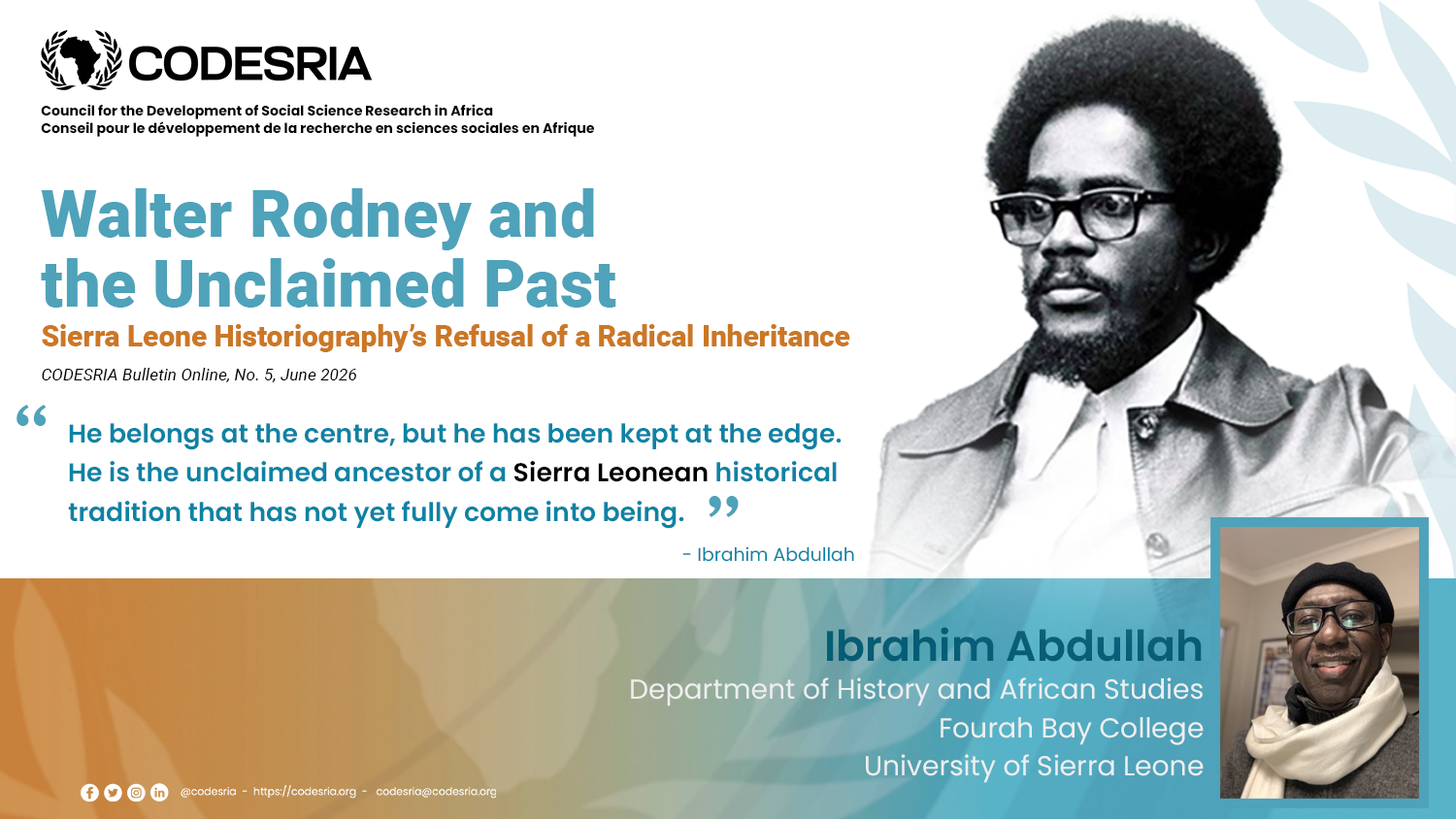
Walter Rodney and the Unclaimed Past: Sierra Leone Historiography’s Refusal of a Radical Inheritance
Bulletin en ligne du CODESRIA, No. 5, June 2026
by
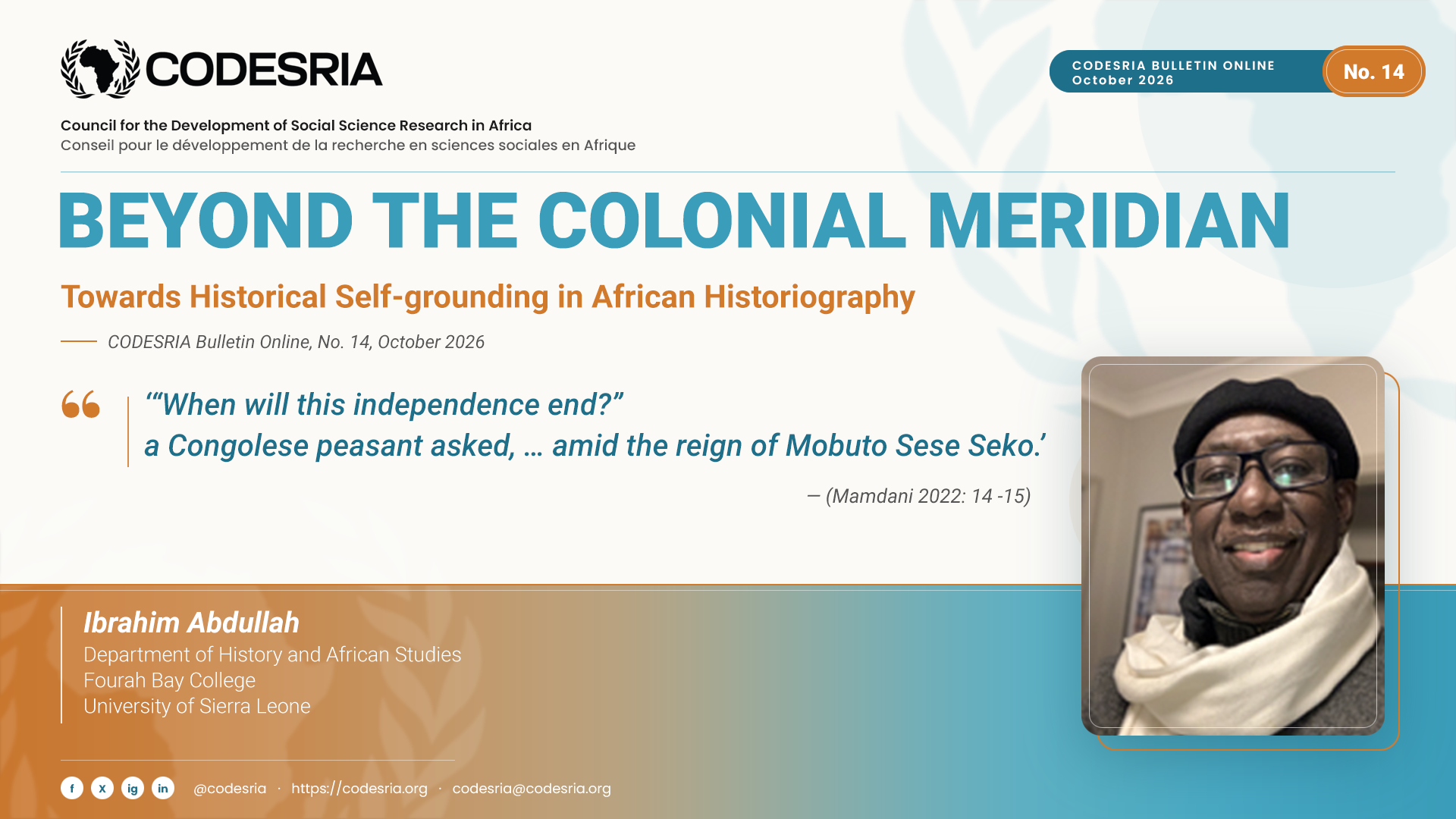
Ibrahim Abdullah, Department of History and African Studies, Fourah Bay College, University of Sierra Leone
Walter Rodney occupies a strange place in the historiography of Sierra Leone. He is everywhere and nowhere. His work shadows some of the most important questions that can be asked about Sierra Leone’s past, yet he has rarely been placed at the centre of Sierra Leonean historical reflection. His presence is foundational, but his reception has been faint. He gave historians one of the most powerful frameworks for understanding the deep past of the region that became Sierra Leone, yet that framework has been neither fully absorbed nor systematically challenged by Sierra Leonean scholars. It has, in many respects, been bypassed.
This is more than an omission. It is a refusal.
Rodney’s doctoral dissertation, later published as A History of the Upper Guinea Coast, 1545– 1800, was not a narrow local study, nor was it merely a contribution to the precolonial history of a coastal zone. It was an intervention into how African history should be written. Its geographical field stretched across the Upper Guinea Coast, from the Gambia down towards Cape Mount, and within that space Sierra Leone was not marginal. It was central to the historical processes Rodney was reconstructing: migration, warfare, political formation, trade, slavery, social stratification, African agency and the long violence of Atlantic incorporation.