




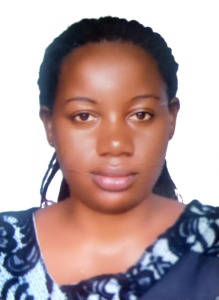
 RONAH AMPEIRE
Second cohort of the African Fellowships for Research in Indigenous and Alternative Knowledges / Deuxième cohorte du programme de Bourses africaines pour la recherche sur les savoirs autochtones et alternatifs (AFRIAK) .
Affliation: Moi University, Kenya
Discipline: Education, Language, and Research
Country / Pays: Uganda
Project Title / Titre du projet: Reclaiming Indigenous Pedagogies for Contextualized and Inclusive Curriculum Development in Uganda
Biographie / Biography: I am currently engaged as a secondary school teacher and a Master of Education (Research) student at Moi University, Kenya. As a teacher of English language and literature, I am actively involved in classroom instruction, learner assessment, and curriculum implementation within Uganda’s formal education system. This role provides me with practical, everyday engagement with pedagogical practices and exposes me to the strengths and limitations of existing curricula in responding to learners’ social, cultural, and community contexts.
Alongside my teaching responsibilities, I am pursuing postgraduate research training focused on educational research methodologies, qualitative inquiry, curriculum studies, and pedagogical analysis. My academic work emphasizes critical engagement with how knowledge is produced and transmitted in education, with particular interest in Indigenous and community-based pedagogies. Through my Master’s programme, I am developing the skills required to conduct rigorous, contextually grounded research that bridges theory, policy, and practice.
My dual engagement as a teacher and a researcher positions me at the intersection of formal schooling and community knowledge systems. Through professional and community interactions, I engage with learners, fellow teachers, and Indigenous knowledge holders, observing how Indigenous pedagogies such as storytelling, observation, apprenticeship, and communal learning continue to shape learning outside formal classrooms. This combined professional and academic engagement enables me to contribute meaningfully to collaborative knowledge production and to explore how Indigenous pedagogies can inform inclusive, relevant, and transformative curriculum development, in line with the objectives of the AFRIAK programme.