






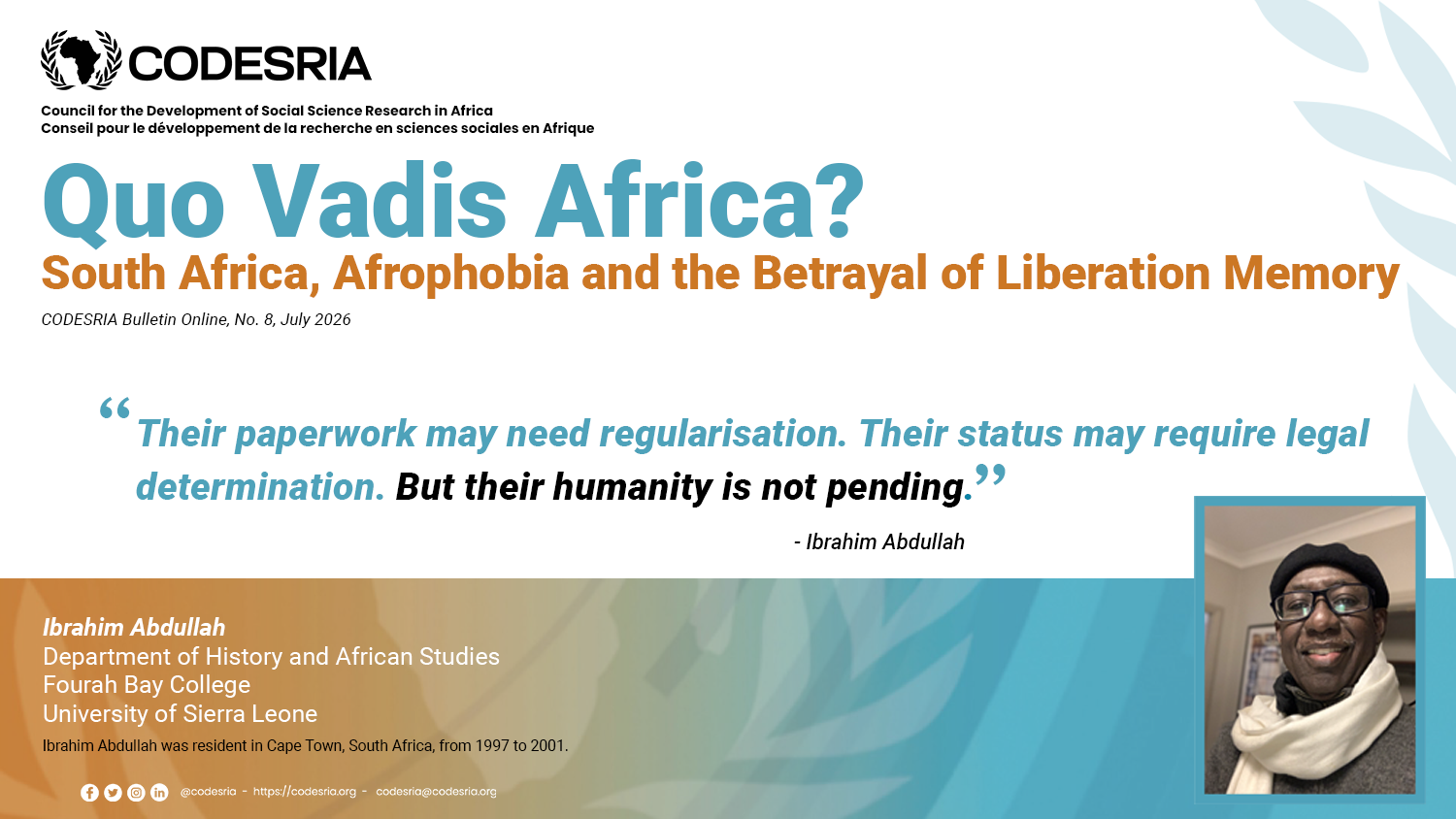
Quo Vadis Africa? South Africa, Afrophobia and the Betrayal of Liberation Memory
CODESRIA Bulletin Online, No. 8, July 2026
by Ibrahim Abdullah, Department of History and African Studies, Fourah Bay College, University of Sierra Leone
The latest upsurge of organised attacks against African migrants in South Africa is not merely another episode of ‘xenophobia’. That word is now too small, too polite, too analytically exhausted. What we are witnessing is something more sinister: Afrophobic vigilantism, the racialisation of immigration status and the privatisation of state power by mobs who have appointed themselves border police over Black African bodies.
The so-called 30 June deadline for undocumented migrants to leave South Africa was not issued by the South African state. Yet its social force has been real. It has emptied streets, shuttered shops, split families, pushed fathers away from children, driven frightened migrants towards buses, churches, embassies and camps and placed entire communities under siege. This is precisely the scandal: a vigilante ultimatum has acquired the psychological force of law.
The state may say, correctly, that it did not issue the order. But the deeper question remains: why did an unlawful ultimatum become so believable, so terrifying and so socially enforceable? Why did vulnerable Africans feel that flight was safer than waiting for constitutional protection? Here, helplessness and complicity begin to blur. A state does not need to formally endorse violence to enable it. It can enable violence through delay, ambiguity, selective enforcement, inflammatory political rhetoric and failure to protect the vulnerable before mobs become confident. When private actors can threaten removals, shut down shops, intimidate workers, inspect belonging and decide who may live in a community, the state has ceded one of its most basic obligations: the protection of persons under its jurisdiction. This is not immigration policy. It is street sovereignty.